
RE-SUSTAINED KIDNAPPING IN KAJURU, KACHIA AND KAGARKO
OPINION
By; Ibrahim Christopher.
I read your article captioned; “Sustained kidnapping in the Kajuru–Kachia–Kagarko axis and the Kaduna State Security Model” and as someone who has personally experienced the horror of kidnapping in Kajuru Local Government, I believe this conversation must go beyond statistics, political arguments and government press statements.
I am speaking not merely as a concerned citizen, but as a victim and survivor.
On 3rd May, 2021, my life changed forever when I was kidnapped in Doka Avong village, Kajuru Local Government Area of Kaduna State. I spent 45 painful days in captivity. Those 45 days were filled with hunger, fear, rain, sun heat, uncertainty and physical abuse. But perhaps the most painful part of that experience was losing my first cousin, who was brutally killed by these heartless bandits on that dreadful night. That experience gave me a completely different understanding of what kidnapping and banditry mean to ordinary people.
For someone sitting safely in an office, kidnapping can easily become a statistic: five people kidnapped, ten people rescued, another community attacked. But for the families involved, those numbers have names, faces, parents, children, siblings and loved ones. Behind every figure is a human being whose life may never be the same again.
BANDITRY AS AN ECONOMY
Banditry in Nigeria has gradually evolved beyond ordinary criminality. It increasingly looks like a lucrative organised criminal business, capable of making some individuals extremely wealthy through ransom payments, cattle rustling, extortion and control of communities.
The ransom economy alone creates an incentive for repeated kidnapping. Once criminals discover that kidnapping can generate millions of naira, it becomes a business model. They recruit, acquire weapons, establish hideouts, identify vulnerable communities and continue operating.
That is why I strongly believe that defeating banditry cannot depend only on rescuing victims after they have been kidnapped. The financial and logistical structures supporting these criminals must also be dismantled.
WHAT I HEARD WHILE IN CAPTIVITY
During my 45 days in captivity, I heard conversations that have remained with me until today. One statement I repeatedly heard was “ai akwai kuɗi a Kaduna” meaning, “there is money in Kaduna.” They compared Kaduna with Zamfara, but hearing such conversations while being held captive gave me the impression that Kaduna had become an attractive destination for criminal networks because of the economic opportunities associated with ransom kidnapping.
This is why I believe intelligence gathering must go beyond simply knowing that bandits exist. Security agencies need to understand how these networks operate, who finances them, who supplies them, where they obtain food and logistics, who facilitates communication, and where ransom money eventually goes.
THE RIJANA QUESTION.
There is also the issue of Rijana, which has repeatedly featured in conversations surrounding insecurity in this axis. From my experience and what I heard during captivity, I find it difficult to understand how criminal networks can continue to operate around known geographical areas without the security architecture developing a sustained strategy to dominate those spaces. But where there are credible intelligence reports pointing to criminal hideouts, routes, camps or support networks, the government must investigate them thoroughly and act within the law.
The real question should be: Why are some criminal networks able to maintain operational freedom for so long?
THE FULANI QUESTION MUST BE HANDLED CAREFULLY
There is another difficult conversation we must have, but it must be handled responsibly. Growing up, many of us knew Fulani herders as peaceful people who lived and interacted with their neighbours. Therefore, it is important to distinguish between Fulani people generally and the criminals who happen to be Fulani. “Banditry is a criminal problem, not an ethnic identity”.
However, during my captivity, I also heard conversations suggesting that some of the bandits carried deep grievances against security agencies and the wider society. One explanation I heard was that some Fulani people felt they had historically been mistreated when they encountered the police or other security agents, particularly during disputes involving cattle and property.
Will Bandits Really Surrender Their Weapons?
Personally, I am deeply skeptical whenever people speak about bandits simply surrendering their weapons and abandoning criminality without a comprehensive strategy. If someone tells you that every armed criminal will voluntarily surrender his weapons merely because government asks him to, I would be extremely cautious about believing that claim.
Some criminals have built their entire livelihood around kidnapping, extortion and illegal control of communities. For such people, surrendering their weapons means giving up their source of income and power. This is why any amnesty, negotiation or reintegration programme must be carefully designed, verifiable and conditional.
Those who genuinely surrender, renounce violence and meet clearly established conditions can be considered for rehabilitation where appropriate. But serious crimes committed against innocent citizens cannot simply disappear because someone claims to have repented. Victims also deserve justice.
The Statement About a “Repentant Bandit”
There is a widely remembered position associated with former Kaduna State Governor Nasir El-Rufai concerning repentant bandits. The statement was controversial, and I understand why many people disagreed with its language. However, when I look at it through the eyes of a kidnapping survivor, I understand the frustration behind the argument: people who repeatedly commit serious crimes cannot simply be trusted because they say they have changed.
The state cannot afford a situation where someone commits crimes, surrenders temporarily, receives benefits, returns to society and later goes back to armed criminality. That would be an injustice to the victims and an incentive to other criminals. Hence the recent statement by Governor Uba Sani that no bandits deserve a second chance. That is welcoming and soothing.
THE SECURITY MODEL MUST GO FURTHER
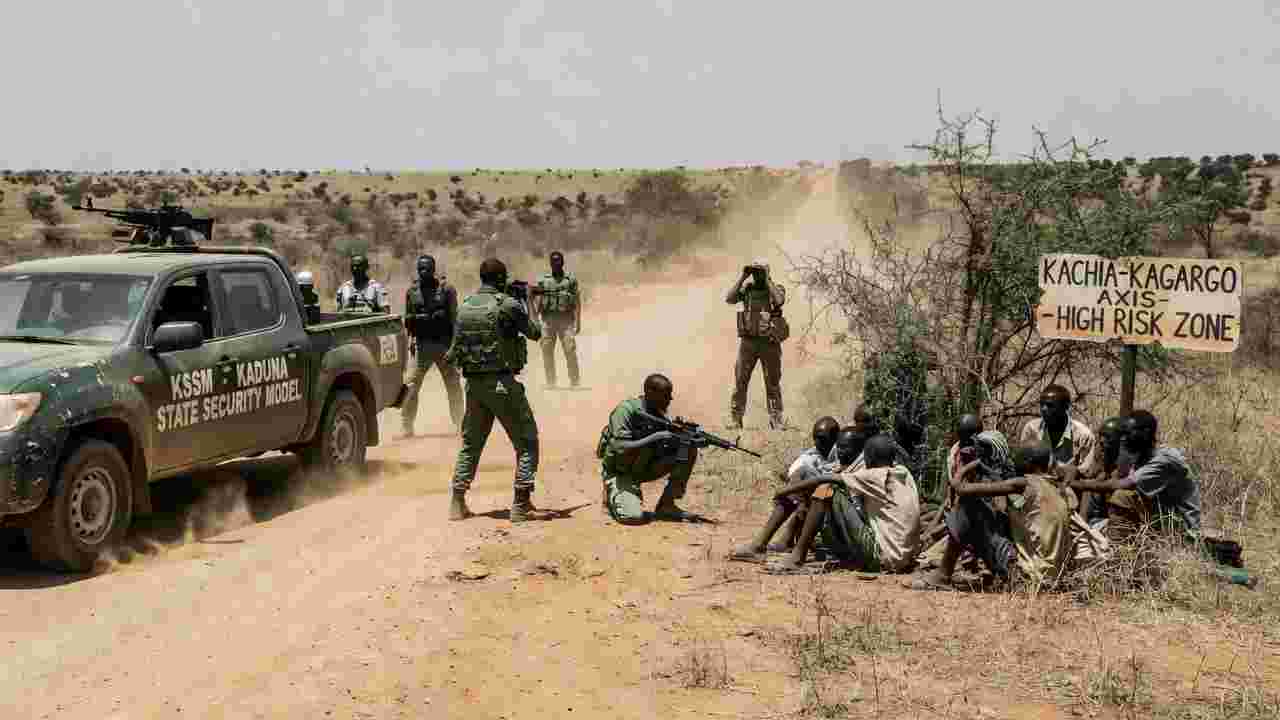
I acknowledge the efforts being made under the current Kaduna State Security Model. Any strategy that has helped restore farming, movement and relative peace in previously troubled communities deserves recognition.
But from the perspective of someone who has personally experienced kidnapping, relative success is not the same as victory. If people are still being kidnapped and kept for weeks or months, if communities remain afraid to sleep peacefully, if farmers cannot safely access their farms and if criminals can still operate across the Kajuru–Kachia–Kagarko corridor, then there is still a lot of work to be done.
WE MUST FOLLOW THE MONEY
One of the most important areas that deserves greater attention is the financial side of kidnapping. If a kidnapper receives millions of naira in ransom, where does the money go?
Who facilitates the transaction? Who provides food, motorcycles, vehicles, communication equipment and other logistics? Who helps criminals move between communities and across state borders? Who launders or invests the proceeds?
These questions are just as important as asking where the criminals are hiding. If kidnapping is treated as a business, then the government must attack the business model. Destroying the camps without disrupting the money and logistics that sustain them may only produce temporary results.
KAJURU, KACHIA AND KAGARKO NEED SPECIAL ATTENTION
The Kajuru–Kachia–Kagarko corridor cannot be treated like an ordinary security environment. Its forests, difficult terrain and proximity to neighbouring states make it particularly challenging. Criminals can exploit those geographical realities to move, hide and reorganise. That is why there should be stronger collaboration between Kaduna and neighbouring states, particularly around intelligence sharing, border surveillance and coordinated operations. The criminals do not recognise state boundaries when escaping security pressure. Security agencies should therefore not allow administrative boundaries to become an advantage for criminals.
LET THE VICTIMS BE HEARD
Perhaps the most important thing I want to add to this conversation is that victims should be part of the security discussion. Those who have survived kidnapping understand things that may not always appear in official reports. We know the fear. We know how criminals communicate. We know how communities behave when they are under pressure. We know what happens when people stop trusting security agencies. We know the psychological damage that continues long after a victim returns home. My cousin never returned, I did.
That difference alone reminds me that every kidnapping case is more than a security statistic.
FINAL POSITION
I believe Kaduna’s Security Model should not be abandoned, but it must continue to evolve. The objective should not simply be to rescue victims after kidnapping occurs. The objective should be to make kidnapping unprofitable, difficult and ultimately unsustainable.
At the same time, government must be honest with citizens. You cannot ask people to provide intelligence while simultaneously making them feel that reporting insecurity is somehow “demarketing” the state. The first responsibility of government is to protect its citizens, not to protect an image.
The criminals may have grievances. They may have stories. They may have suffered injustices. But no grievance gives anyone the right to destroy innocent lives. I was there. I survived it. My cousin did not. And that is why I believe Kaduna must win this war, not merely manage it. I definitely agreed, ‘no one is safe until everyone is safe’.
Chris, a victim of kidnapping writes from Kaduna.


