Kaduna Stakeholders Warn of Political Exclusion, Demand Urgent Action on Reserved Seats for Women
By Alex Uangbaoje, Kaduna
Kaduna State on Friday became the centre of a heated national debate as lawmakers, gender advocates and legal experts warned that Nigeria’s democracy is weakening under the weight of women’s political exclusionand insisted that the Reserved Seats for Women Bill is the most practical path forward.
The 1st Kaduna State Parliamentary Stakeholders Power Table on the bill, held as part of the 16 Days of Activism for the Elimination of Gender-Based Violence, saw speaker after speaker underline a clear message: Nigeria cannot fight gender-based violence or strengthen governance without women in the rooms where decisions are made.
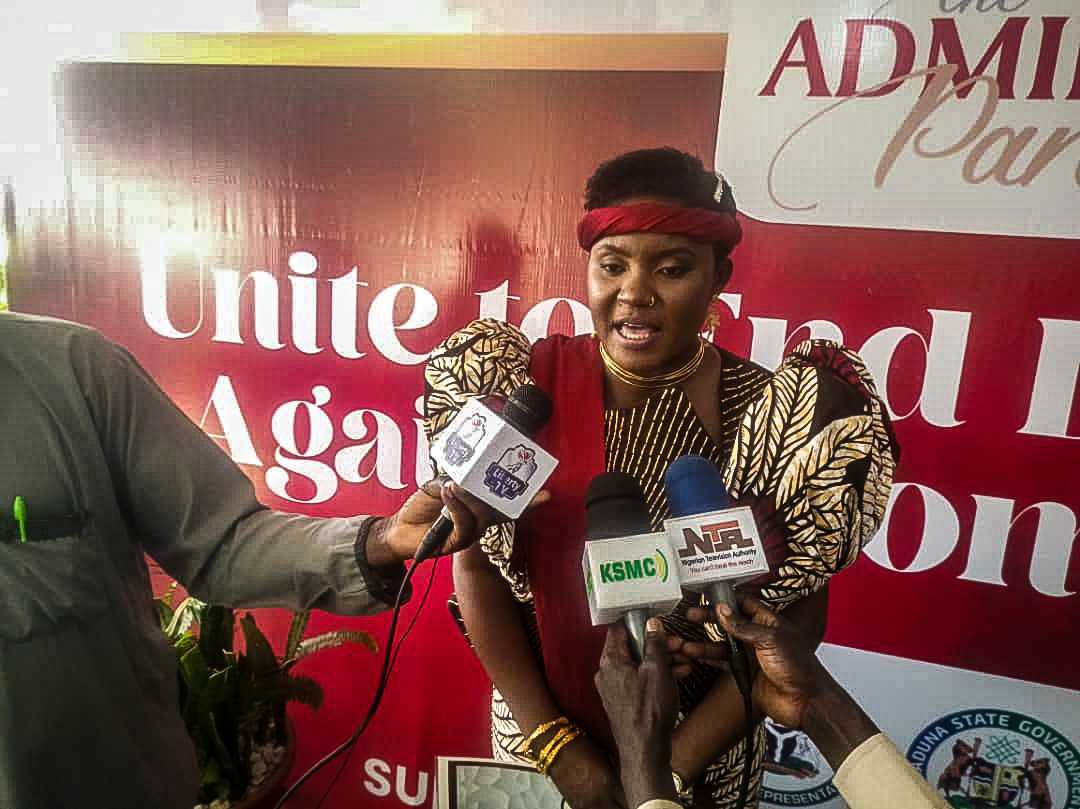
Chairperson of the League of Women Voters, Barrister Julie Ariahu, expressed frustration that despite their electoral influence, women remain largely absent in legislatures.
She said women’s exclusion is not a question of competence but the result of embedded structural barriers.
According to her, this absence has real consequences, noting that countries with stronger women’s representation have more responsive systems for preventing and addressing gender-based violence.
“Pass the Reserved Seats for Women Bill. Put women where budgets, laws and policies are shaped. When women lead, society is safer,” she added.
Kaduna’s Attorney General, Barrister James Kanyip, delivered one of the strongest warnings of the day, arguing that women possess the numerical strength to reshape politics but lack the coordinated push needed to seize power.
He said Nigerian women often play kingmaker for male politicians but fail to organise effectively for themselves.
“Politics is competitive. No one hands you a seat. You take it. Women can deliver men into office why can’t they deliver themselves?” she asked.
Kanyip identified economic barriers, weak political organisation and limited pre-election engagement as key obstacles.
He questioned whether reserved seats would work if women do not mobilise early, contest boldly and support one another beyond election day.
His proposed solution was a call to action: women must reorganise, pool economic resources, and treat political participation as a year-round project not an election-day activity.
Speakers recalled the Beijing Declaration’s 30 percent affirmative action commitment, which was celebrated but never implemented. With that history, scepticism loomed over whether the proposed Reserved Seats Bill could fare any better.
Convener of the Power Table, Hon. Dr. Nita Byack George, acknowledged these concerns but argued that Nigeria is at a turning point.
She pointed to Kaduna’s gender reforms, including the creation of a Gender Desk at KADPPA and a law prioritising women in procurement processes as proof that change is possible when political will exists.
She said “If a home cannot function without a woman, how can a nation exclude women from shaping its laws?
“This is the moment for our parliamentarians to show they truly believe in women.”
“Legislators must face public pressure from citizens, civil society and women’s groups to pass the bill and women must claim the seats once they are created,” she said.
Participants agreed that Nigeria’s governance and its fight against gender-based violence are weakened by the near absence of women in legislative chambers.
With only one woman currently in the Kaduna State House of Assembly, and similar gaps nationwide, they argued that urgent legislative intervention is no longer optional it is necessary.
The solution they championed was clear: pass the Reserved Seats for Women Bill, implement it without delay, and mobilise women to occupy the spaces created.
As the 16 Days of Activism continue, stakeholders vowed to intensify advocacy across communities, the media and the National Assembly, insisting that Nigeria cannot move forward while leaving half its population behind.